Combine your inputs in one game-control setup

Combine your controller and adaptive devices with head movement, facial gestures, voice, and on-screen controls. Map each supported input to a gamepad, mouse, or keyboard action.

Choose your platform · No credit card

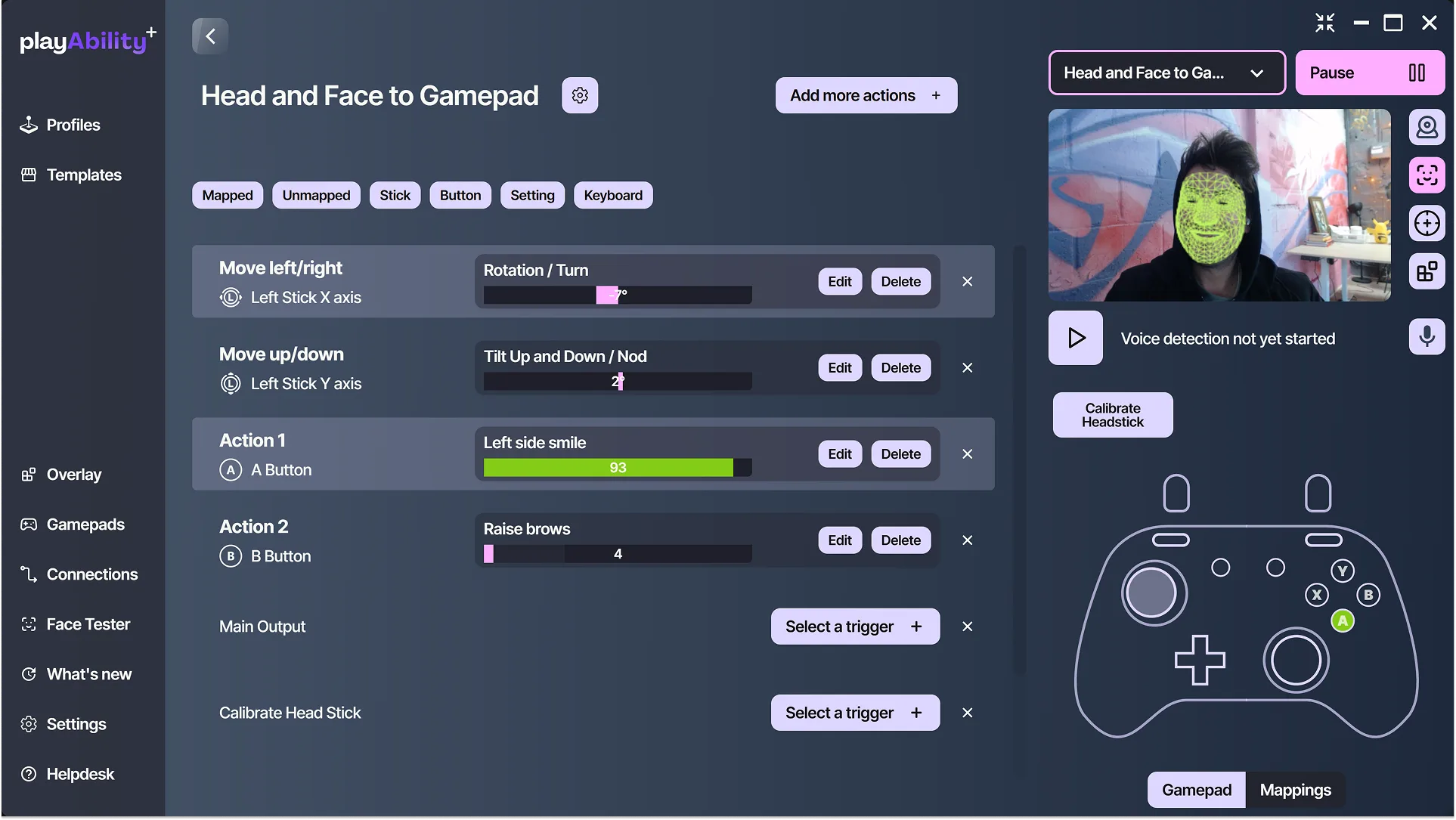
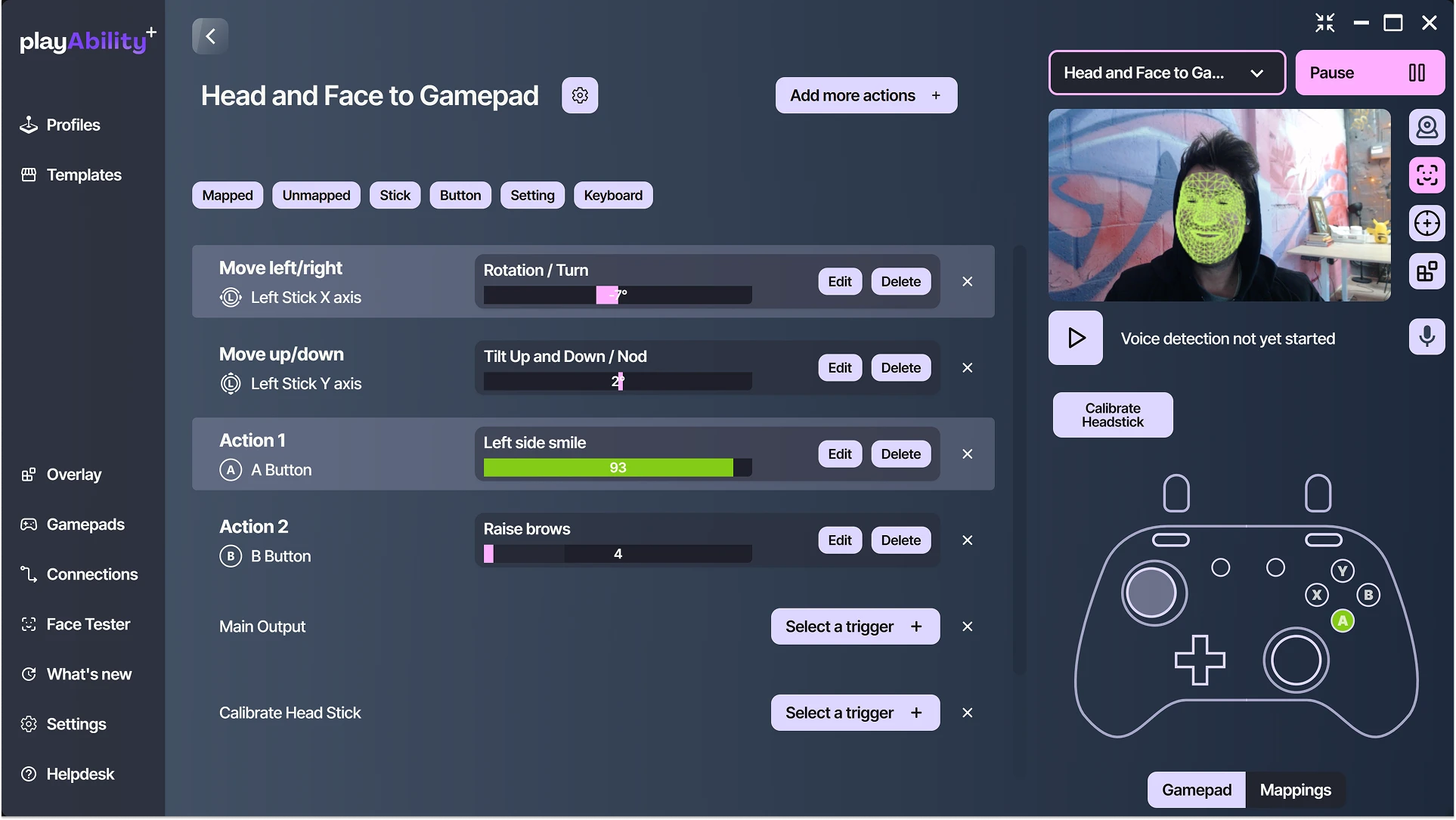
PlayAbility interface mapping head movement and facial gestures to a virtual gamepad

Keep the controls that work

Start with the inputs that are comfortable and reliable, then add controls for the remaining actions.

Keep

Controls and devices already in your setup

  • Controller

    Keep the sticks, triggers, and buttons that are comfortable to reach.

  • Keyboard and mouse

    Continue using the keys, clicks, and movement that already work.

  • Switches and joysticks

    Keep supported adaptive inputs assigned to the actions they handle well.

  • Xbox Adaptive Controller

    Add PlayAbility inputs to a supported Xbox Adaptive Controller setup.

Add

Head, face, voice, and on-screen inputs for selected actions

  • Head movement

    Add analog movement for steering, aiming, camera control, or cursor movement.

  • Facial gestures

    Turn a comfortable smile, eyebrow raise, blink, or mouth movement into an action.

  • Voice commands

    Use a word or short phrase for occasional actions such as reload or pause.

  • On-screen controls

    Add clickable buttons and virtual sticks through the PlayAbility overlay.

Map controls in one profile

Map an available input to the action you need

PlayAbility translates your chosen inputs into standard gamepad, mouse, and keyboard outputs. Each mapping can be adjusted independently, so a profile can combine physical devices with head, face, voice, and on-screen controls.

Available input

Turn your head

Game action

Move an analog stick

A starting point for steering, aiming, or camera movement.

Available input

Smile

Game action

Press a gamepad button

Use a facial gesture that feels comfortable and repeatable.

Available input

Say “reload”

Game action

Press a key or button

Voice works best for discrete actions that do not need continuous control.

Available input

Press an adaptive switch

Game action

Trigger a chosen action

Keep a reliable physical input and decide exactly what it should control.

Available input

Move a supported joystick

Game action

Control a virtual stick

Combine its axes with other inputs in the same profile.

Available input

Click an on-screen control

Game action

Send a mouse, key, or gamepad action

Add touch-style controls to a Windows gaming setup.

Starting points to adapt

Build the setup around the player

Adaptive gaming layouts vary by player. These examples show several ways to distribute controls across available movements and devices.

Head movement and facial gestures mapped to virtual gamepad controls in PlayAbility

One-handed controller setup

Keep frequent actions on one hand and move selected controls elsewhere.

Keep
A controller stick and the buttons that are easy to reach with one hand.
Add
Head movement for camera control and voice for an occasional menu action.
Possible result
Each input handles its assigned actions while the controller retains the main controls.
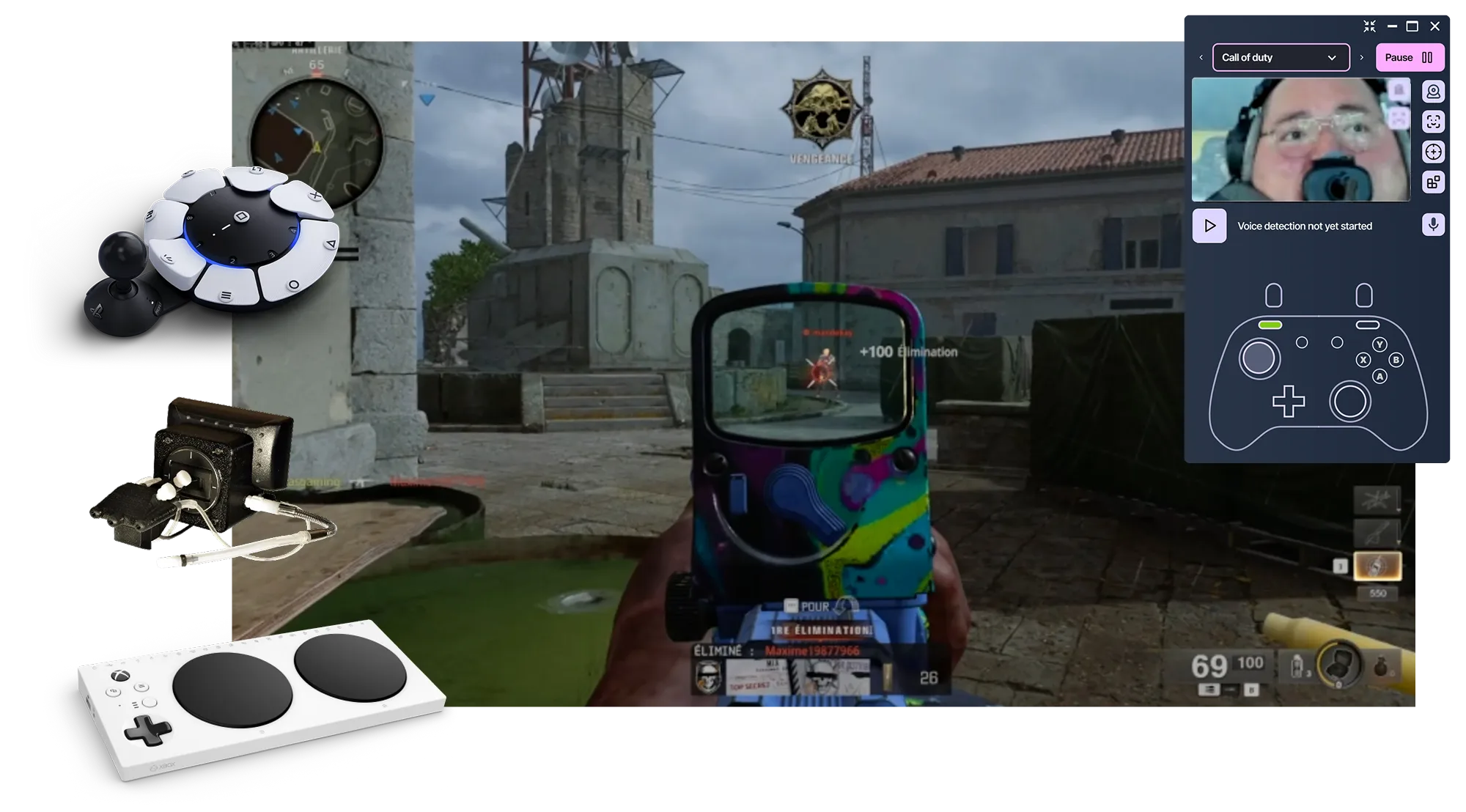
Call of Duty played with a QuadStick, Xbox Adaptive Controller, and PlayAbility

Adaptive hardware setup

Extend an existing device layout with software-driven inputs.

Keep
Supported switches, a joystick, pedals, or an Xbox Adaptive Controller configuration.
Add
A facial gesture for a selected button and head movement for another analog axis.
Possible result
Several specialized inputs mapped through one PlayAbility profile.
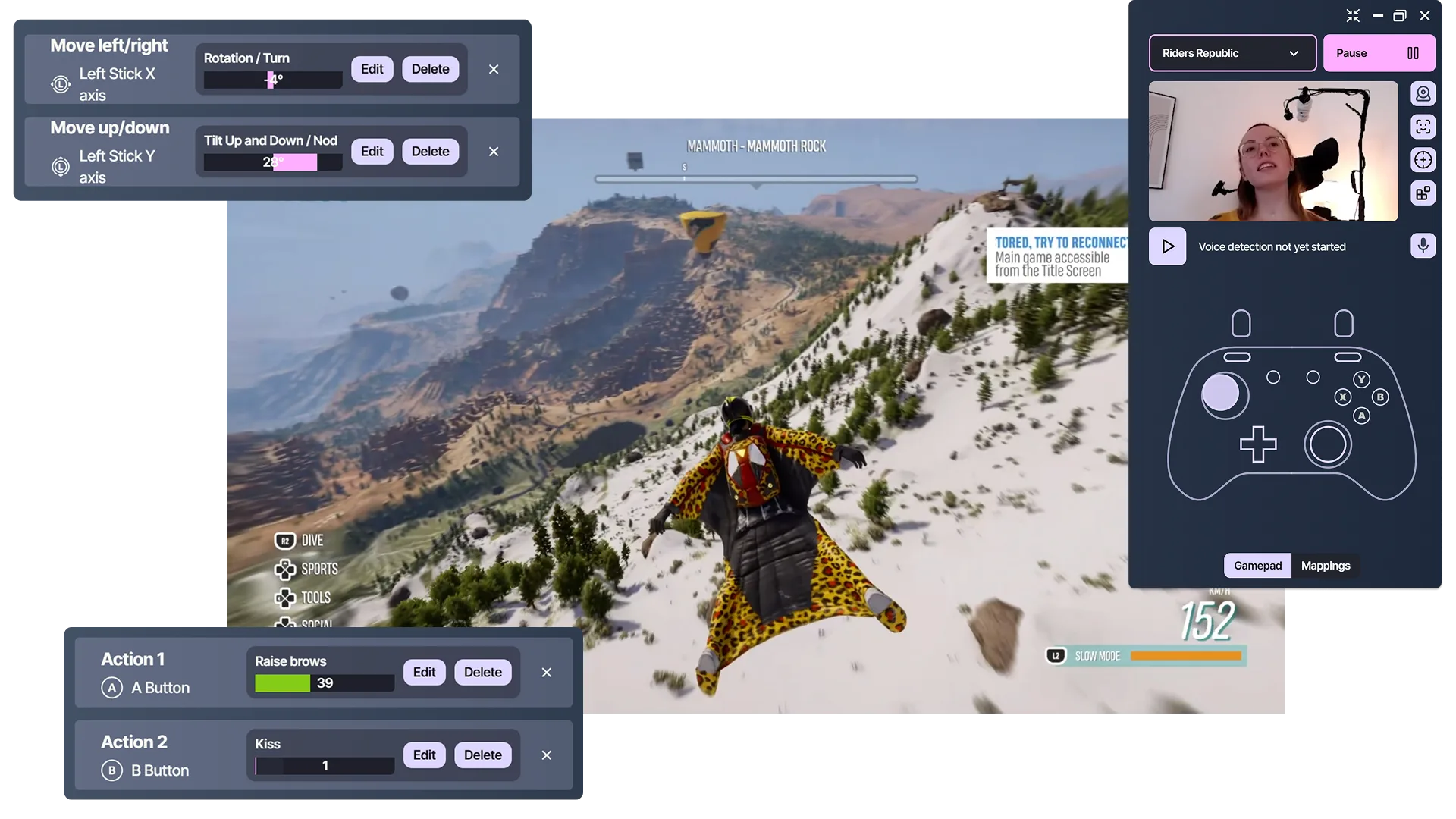
Head movement and facial gestures configured to control a game with PlayAbility

Hands-free setup

Build a profile from head movement, facial gestures, voice, and supported devices.

Keep
Any supported switch or device the player already uses, when helpful.
Add
Head movement for analog control, facial gestures for buttons, and voice for occasional actions.
Possible result
A customizable gamepad, mouse, or keyboard layout that can be used fully or partly hands-free.

Treat these as ideas to test gradually. Choose movements and devices that are comfortable, reliable, and appropriate for the player.

Works with the controls games already understand

On Windows, PlayAbility can output standard gamepad, keyboard, and mouse actions. It can therefore work with games that accept those input types; the exact controls available depend on the game and the profile you create.

For console play, PlayAbility runs on a computer and connects through a supported Remote Play or adapter setup. Check the current guide for the console and connection method before choosing hardware.

Adaptive gaming questions

Direct answers about combining devices, mapping controls, compatibility, and getting started.

What is adaptive gaming software?

Adaptive gaming software changes how a player’s available movements, sounds, and devices become game controls. It can translate inputs such as head movement, facial gestures, voice, switches, a mouse, or a controller into the keyboard, mouse, or gamepad actions a game expects. It can be used with a game’s accessibility settings and adaptive hardware.

How does PlayAbility work?

PlayAbility lets you create a profile that connects each chosen input to a gamepad, mouse, keyboard, or settings action. For example, head movement can control an analog stick while a facial gesture presses a button. The Windows app sends the mapped outputs that the game or application recognizes.

Do I have to stop using my current controller?

No. PlayAbility adds controls to the setup you already use. Keep your preferred inputs on a controller, keyboard, mouse, switches, joystick, or adaptive device, then place other actions on head movement, facial gestures, voice, an overlay, or another supported input.

Can I combine a controller with head movement, facial gestures, or voice?

Yes. A single PlayAbility profile can combine a controller with head movement, facial gestures, voice, keyboard, mouse, and supported adaptive devices. You might keep movement and frequent buttons on the controller, use head movement for camera control, and reserve voice for an occasional command. The mix can be adjusted for each game and player.

Does PlayAbility work with every PC game?

PlayAbility works with PC games that accept standard gamepad, keyboard, or mouse input. The game does not need a PlayAbility-specific integration. Compatibility and available actions still depend on the game, its input settings, other software in the setup, and the profile you create.

Do I need special adaptive hardware to start?

Not necessarily. For head movement or facial gestures, a compatible Windows computer and webcam can be enough to begin; voice also needs a microphone. PlayAbility can also work with supported controllers, switches, joysticks, and adaptive devices you already own. Additional hardware is only needed when it supports the setup you choose.

Is PlayAbility only for fully hands-free gaming?

No. Fully hands-free play is one option among many. PlayAbility also supports one-handed, controller-plus, and hybrid setups. Keep your preferred controls on an existing controller or adaptive device, then choose the actions you want to place on head movement, facial gestures, voice, an overlay, or another input.

Start with one reliable control, test it, then add the next input only when it solves a clear problem.

Getting started guide

Install PlayAbility, choose inputs, create a profile, and test your first controls.

Read the guide

Gamepad, keyboard, and mouse tester

Check the physical inputs your browser can see before you build a mapping.

Test your controls

Build one setup around the controls that work for you

The free edition includes every control feature and one customizable profile.